
Why Most Founders Struggle to Turn Good Ideas Into Real Products
Great ideas are only the beginning. The real challenge is turning them into products that people can actually experience.
Good ideas are everywhere. What is rare is turning them into real products.
Many founders spend months thinking about their startup. They research competitors, map features, and imagine what the finished platform could become. On paper, the vision is exciting.
But when it comes time to actually build something, everything suddenly becomes unclear.
Where do you start? What should the first version include? How do you avoid spending months building the wrong thing?
This is where many ideas quietly stall.
Not because the idea is weak, but because moving from concept to product requires a different kind of thinking.
Ideas live in possibilities. Products require decisions.
A real product needs structure. It needs a clear outcome, a simple experience, and a focused problem it solves for the user. Without that clarity, founders often fall into one of two traps.
Some try to build too much too soon, adding features before the core idea has even been tested. Others stay stuck in planning mode, waiting until everything feels perfect before they begin.
Both approaches slow momentum.
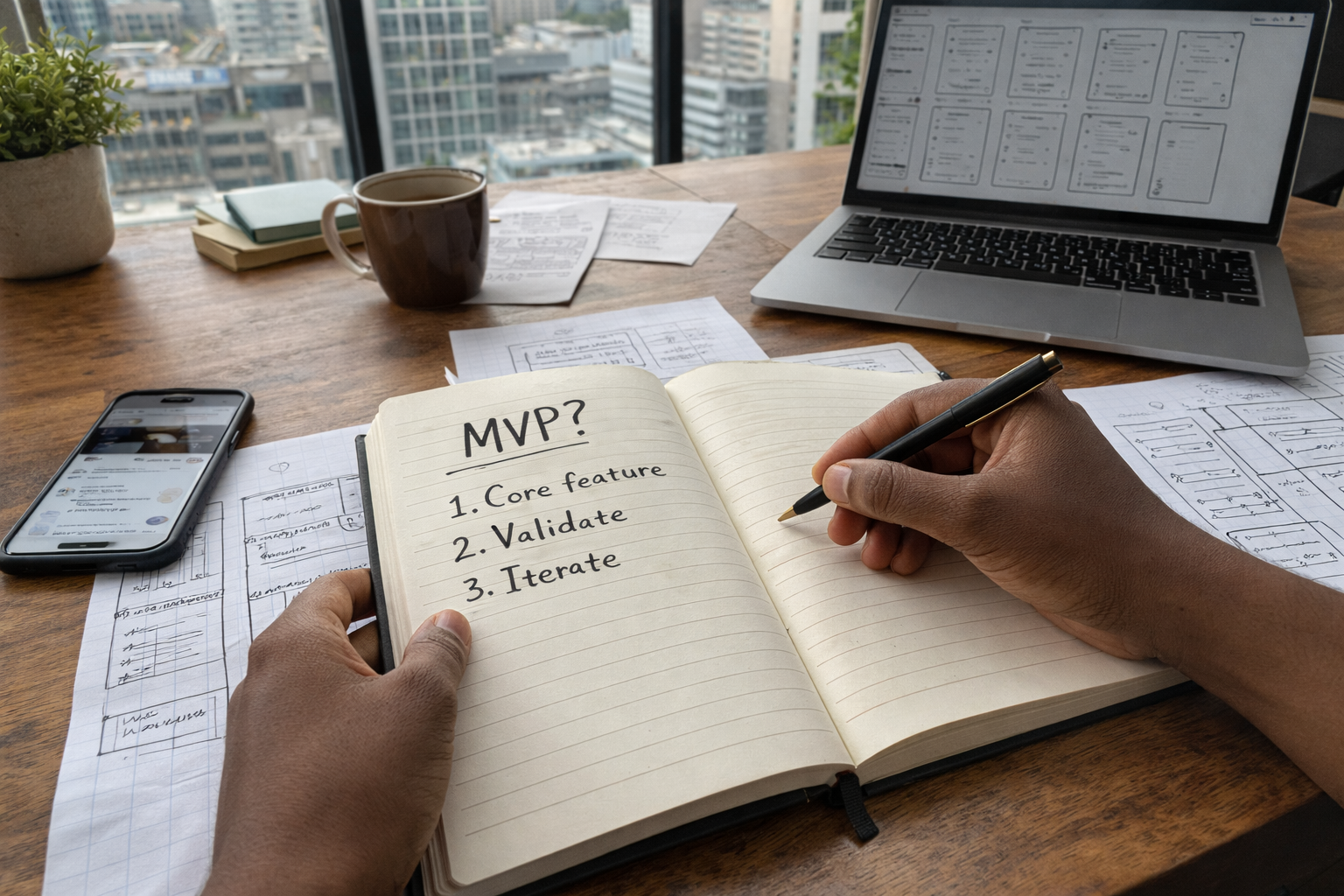
The strongest startups focus on something much simpler: building the smallest version of the idea that proves it works.
This first version isn't meant to be perfect. It's meant to answer a single question.
Do people actually want this?
Once real users can interact with the product, everything changes. Founders learn what people care about, what they ignore, and what needs to evolve.
Progress starts the moment an idea becomes something real.
Because the biggest difference between a good idea and a successful startup isn't creativity. It's execution.
Final Thoughts
Speed isn't just a technical metric—it directly impacts business success. Investing in website performance means happier users, better rankings, and increased revenue. If your site is slow, now is the time to fix it.
How to Build an MVP for Your Startup Without Wasting Time or Money

Why Your Startup Isn’t Growing (And It’s Not a Marketing Problem)
Let's keep in touch.
Discover more about high-performance web design. Follow us on Twitter and Instagram.
