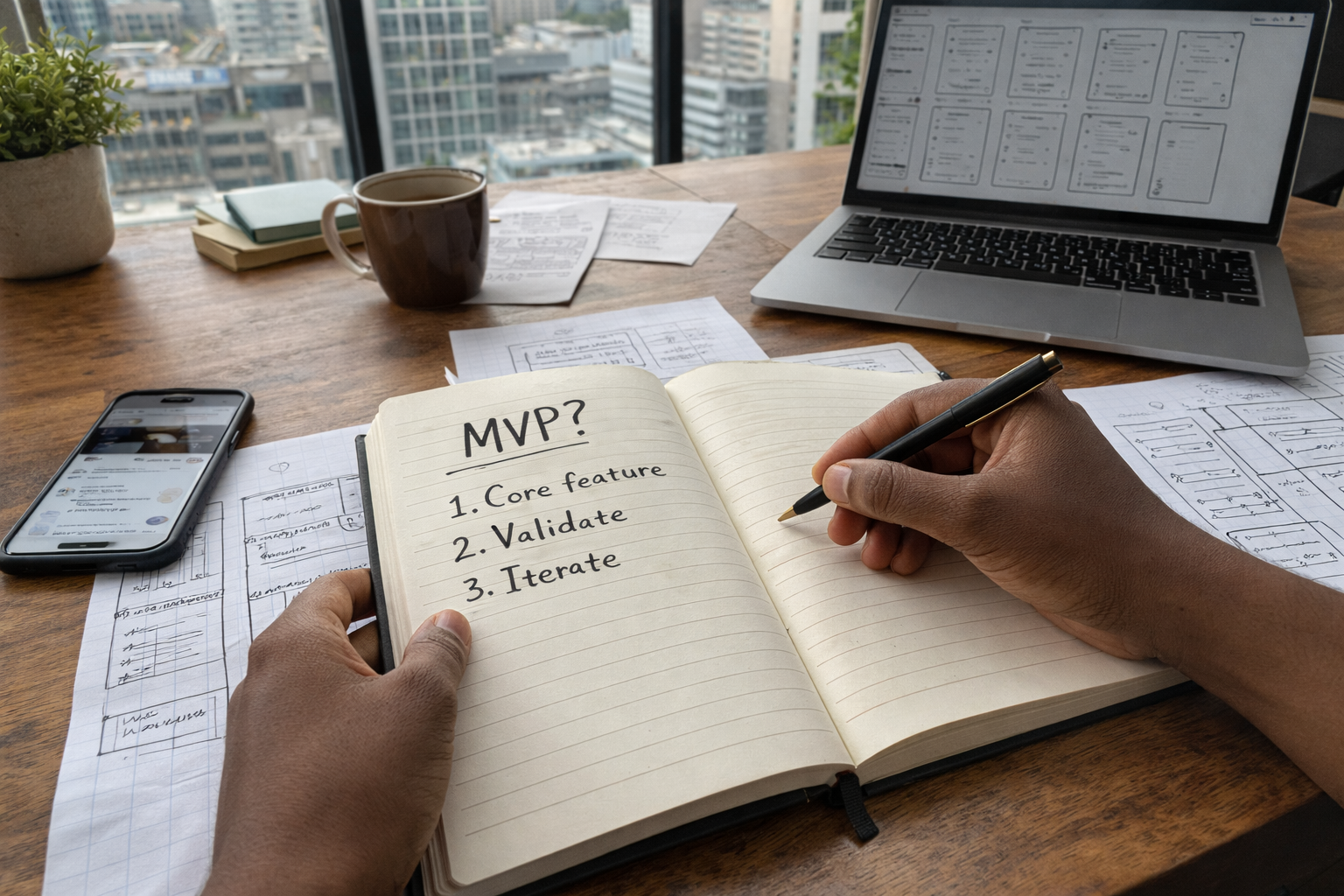
How to Build an MVP for Your Startup Without Wasting Time or Money
Idea to MVP: An MVP is not a smaller version of your full product. It is a strategic test.
There's a stage in every startup where the idea feels clear in your head but slightly messy when you try to explain it out loud.
You can see the product. You've probably already imagined the full version. But when it comes to building the first version, the MVP, things get more complicated.
This is usually where founders either move forward with structure or spend months building something they later have to undo.
If you're trying to build an MVP for your startup, this is the stage that matters most. The first version. And the goal at this stage is not to impress anyone. It's to test something specific.
What an MVP Actually Is?
MVP stands for Minimum Viable Product.
In simple terms, it's the smallest version of your product that allows you to test whether people will actually use it.
- Paying for it
- Signing up
- Completing a core action
- Coming back a second time
If your MVP doesn't test behaviour, it's not doing its job.
When you build an MVP for a startup, you are not trying to prove the full vision works. You are trying to reduce risk and learn quickly.
Why Founders Waste Time at This Stage
The most common mistake in startup product development is overbuilding. You have a full roadmap in your head, so you try to build it all at once. It feels productive.
But complexity delays feedback. And without feedback, you are building based on assumption. The early stage is about validation.
Step 1: Clarify the Problem Properly
Before writing a line of code, answer this clearly:
- Who is this for?
- What specific problem are they facing?
- What happens if they don't solve it?
If you struggle to answer this in one sentence, you're not ready to build.
This is where the idea to MVP process really begins. Clarity before development.
Step 2: Validate Before You Build
You do not need a finished product to validate demand.
- Speak to potential users
- Offer a manual version of the service
- Create a simple landing page
- Collect early sign-ups
- Run a small paid test
Validation reduces waste. Most founders skip this because building feels more tangible than talking to users. But validation protects both time and money.
Step 3: Define the Smallest Testable Version
This is where discipline matters. If your product has ten features in its final form, your MVP probably needs one.
Ask: What is the single action that proves this idea has traction?
If you're building a marketplace, maybe you manually connect buyers and sellers first. If you're building a SaaS tool, maybe you focus on solving one narrow workflow.
When building an MVP without a technical cofounder, this clarity becomes even more important. The clearer the scope, the lower the cost.
Step 4: Design Before You Develop
Jumping straight into development is one of the fastest ways to overspend.
Before you build:
- Map the user journey
- Define the core steps
- Sketch out the basic screens
You don't need perfect branding at this stage. You need clarity around what the user does and why. A well thought through structure saves months of rebuilding later.
Step 5: Build, Launch, Observe
Now you build the smallest possible version.
- No-code tools
- A tightly scoped development sprint
- A small contractor team
The goal is not perfection. Launch. Watch how users behave. Refine based on real data.
Building an MVP Without a Technical Cofounder
Many founders assume they need a CTO before they can move forward. That's not always true.
- Learn enough no-code to test your idea
- Hire a developer with a clearly defined scope
- Work with a product studio that structures and builds the right version
Important: developers build what you ask for. If you don't know exactly what to ask for, costs escalate quickly.
Most important thing to remember!
Startup culture celebrates big launches. Strong companies are built through small, deliberate steps. Build less than you think you need. Test earlier than feels comfortable. Listen closely to what the data tells you. That's how you move from idea to something real without wasting time or money.
Final Thoughts
Speed isn't just a technical metric—it directly impacts business success. Investing in website performance means happier users, better rankings, and increased revenue. If your site is slow, now is the time to fix it.

Why Your Startup Isn’t Growing (And It’s Not a Marketing Problem)

Why Most Founders Struggle to Turn Good Ideas Into Real Products
Let's keep in touch.
Discover more about high-performance web design. Follow us on Twitter and Instagram.
